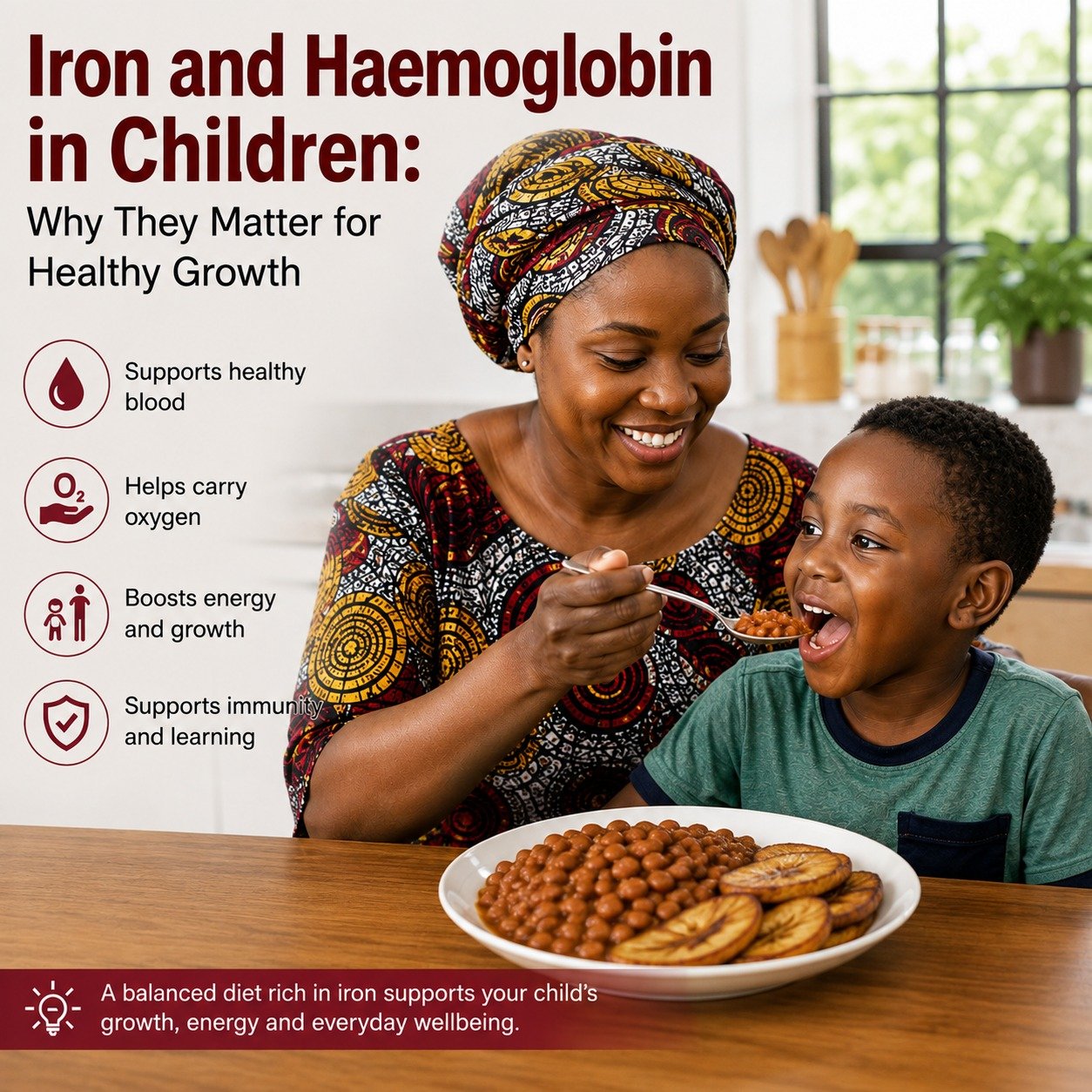
A child can eat every day and still not get enough of certain nutrients. That’s why when it comes to children’s nutrition, it’s not just about how much food a child eats. It’s also about the nutrients that food provides. One nutrient parents should pay particular attention to is iron.
Iron plays an important role in the production of haemoglobin, while haemoglobin helps red blood cells carry oxygen around the body. Together, iron and haemoglobin are closely connected to a child’s ability to support normal growth, development and everyday activity.
For Nigerian parents, understanding the relationship between iron, haemoglobin and children’s health can make it easier to recognise the importance of a balanced diet and know when professional advice may be needed.
Let’s break it down.
What Is Haemoglobin?
Haemoglobin is a protein found inside red blood cells. Its major job is to carry oxygen from the lungs to tissues throughout the body and help transport carbon dioxide back toward the lungs. Think of red blood cells as tiny delivery vehicles. Haemoglobin is the part that helps them carry their oxygen cargo.
Every day, your child’s muscles, brain and other organs need oxygen to function properly. That makes healthy red blood cells and adequate haemoglobin essential parts of normal body function. When haemoglobin levels are too low, a child may have anaemia. Anaemia has many possible causes, but iron deficiency is one of the common nutritional causes.
Why Does Iron Matter?
Iron is an essential mineral that the body needs for several important functions. One of its best-known roles is helping the body produce haemoglobin. When a child doesn’t get enough iron over time, the body’s iron stores can become depleted. If the deficiency becomes significant, it can contribute to iron-deficiency anaemia.
Children need adequate iron because they are growing rapidly. Their blood volume, muscles and tissues are developing, while their brains are also undergoing significant development.
That’s why iron-rich foods for children should be part of a balanced diet.
What Happens When Children Don’t Get Enough Iron?
Iron deficiency can develop gradually, and the signs aren’t always obvious at first. Depending on the severity and cause, a child with iron deficiency or anaemia may experience:
-
Tiredness or low energy
-
Weakness
-
Pale skin
-
Poor appetite
-
Irritability
-
Difficulty concentrating
-
Reduced attention
-
Shortness of breath during activity
-
Poor growth in some cases
However, these symptoms can have many causes. You cannot confirm iron deficiency simply by looking at a child or observing one symptom. A healthcare professional may need to assess the child’s history, diet and symptoms and, when appropriate, request blood tests.
The Best Iron-Rich Foods for Children
The good news is that many iron-rich foods are familiar to Nigerian families.
1. Meat and Poultry
Beef, chicken and other meats can provide iron, particularly haem iron, which is generally absorbed more efficiently than the non-heme iron found in plant foods.
2. Fish and Seafood
Fish can contribute iron as well as protein and other valuable nutrients. Sardines, mackerel and other fish can also provide omega-3 fatty acids such as DHA, making fish a particularly nutritious part of a child’s diet.
3. Liver
Liver is particularly rich in iron and other nutrients. However, because liver contains very high amounts of vitamin A, it should be eaten in moderation and prepared appropriately, especially for young children. Parents should seek professional dietary advice where necessary.
4. Beans
Beans are an excellent Nigerian staple and provide plant-based iron, protein and fibre. Foods such as beans and rice, moi moi and akara can contribute valuable nutrients to a child’s diet.
5. Dark Green Vegetables
Vegetables such as spinach and other leafy greens can contribute iron and several other vitamins and minerals.
6. Fortified Foods
Some cereals and other foods are fortified with iron and can contribute to children’s overall iron intake. The important thing is to look at the whole diet, rather than depending on one food.
How Can Parents Help the Body Absorb More Iron?
Here’s a useful nutrition tip that many parents may not know:
Not all dietary iron is absorbed equally. There are two broad types of dietary iron: haem iron, mainly found in animal foods, and non-heme iron, mainly found in plant foods. The body generally absorbs haem iron more efficiently. But there is also a simple way to help improve the absorption of non-heme iron:
Add Vitamin C.
Vitamin C can improve the absorption of non-heme iron. For example, you could serve a meal containing beans alongside vitamin C-rich foods such as:
-
Orange
-
Tangerine
-
Guava
-
Pawpaw
-
Mango
-
Tomatoes
-
Bell peppers
This is one reason why iron and vitamin C for children can be an important nutritional combination.
What Can Reduce Iron Absorption?
Certain foods and drinks can affect the absorption of non-heme iron when consumed around the same meal. For example, compounds found in tea and coffee can reduce iron absorption.
Calcium can also interfere with the absorption of non-heme iron under some circumstances. This doesn’t mean children should avoid calcium-rich foods. Calcium remains an essential nutrient for growing bones and teeth. Rather, parents should focus on a balanced diet and sensible meal combinations, particularly when a child has been diagnosed with iron deficiency.
If your child has confirmed iron deficiency, ask a healthcare professional for specific dietary advice.
Can a Child Get Enough Iron From Food?
Many children can obtain adequate iron from a varied, balanced diet. But nutritional needs differ depending on age, growth stage, diet and individual circumstances. Some children may be more vulnerable to iron deficiency, including children with certain dietary restrictions or health conditions.
Infants and young children also have specific nutritional requirements, which is why feeding recommendations should be age-appropriate. If you’re concerned about your child’s iron intake, don’t rely solely on online information.
Talk to a paediatrician, doctor, dietitian or other qualified healthcare professional.
What About Iron or Haemoglobin Supplements?
Sometimes, dietary changes may not be enough, particularly when a child has been diagnosed with iron deficiency or anaemia. A healthcare professional may recommend an appropriate iron-containing supplement depending on the child’s needs.
HBeam Haemoglobin Syrup by Jehyson can be considered as part of a professional conversation about nutritional supplementation when appropriate. Parents should always follow the recommended dosage and product instructions and should not give a child iron supplements simply because they suspect anaemia.
Why?
Because too much iron can be harmful. Iron supplementation should therefore be appropriate to the child’s age, nutritional needs and clinical situation.
When Should Parents Seek Professional Advice?
Parents should speak with a healthcare professional if they notice persistent or concerning symptoms such as:
-
Unusual tiredness
-
Persistent weakness
-
Pale skin
-
Poor appetite
-
Poor growth
-
Difficulty concentrating
-
Breathlessness
-
Recurrent health concerns
-
Unusual cravings, such as eating non-food substances
Parents should also seek professional advice if a child has been diagnosed with anaemia, has a restricted diet or has another condition that may affect nutrient absorption. A healthcare professional may recommend a blood test to check haemoglobin and other indicators of iron status.
Testing is important because anaemia is not always caused by iron deficiency.
Other nutritional deficiencies, infections, inherited blood disorders and medical conditions can also contribute to anaemia.
Iron Is Important—but It Isn’t Everything
It’s easy to focus heavily on iron when talking about children’s blood health, but remember that healthy growth requires many nutrients. Children also need:
-
Protein for growth and tissue maintenance
-
Calcium and vitamin D for healthy bones
-
Zinc for normal growth and immune function
-
Vitamin A for normal vision and immune function
-
Vitamin C for immune function and iron absorption
-
B vitamins for important metabolic and nervous-system functions
-
Omega-3 fatty acids such as DHA as part of healthy nutrition
This is why a balanced diet for children is so important. A plate containing beans, rice, vegetables, fish and fruit, for example, can provide a much wider range of nutrients than a meal based on one food group alone.
Simple Iron-Rich Meal Ideas for Nigerian Children
Looking for practical ideas?
Try combinations such as:
Breakfast: Pap + egg + fruit
Lunch: Beans + rice + fish + vegetables
Snack: Fruit + yoghurt
Dinner: Yam + vegetable sauce + fish or meat
The right portion size depends on the child’s age and individual needs.
The goal isn’t perfection at every meal. Aim for variety across the day and week.
The Bottom Line
Iron and haemoglobin play important roles in children’s health. Iron helps the body produce haemoglobin, while haemoglobin helps transport oxygen throughout the body. Adequate iron intake is therefore an important part of supporting healthy growth and development in children.
For Nigerian parents, there are many familiar foods that can contribute to a child’s iron intake, from beans, meat, fish and eggs to leafy vegetables and fortified foods.
Pairing plant-based iron sources with vitamin C-rich foods can also help the body absorb more non-heme iron. But if you suspect your child may have iron deficiency or anaemia, don’t guess and don’t self-medicate.
Get professional advice.
A healthy child isn’t simply one who eats enough. It’s one who receives the right combination of nutrition, care, sleep, activity, healthcare and love to support their growing body and developing mind. And sometimes, something as simple as understanding the importance of iron and haemoglobin can be an important step toward giving your child a healthier start.
Frequently Asked Questions
What is haemoglobin in children?
Haemoglobin is a protein in red blood cells that helps transport oxygen from the lungs to tissues throughout the body.
What foods are high in iron for children?
Good sources include meat, poultry, fish, liver, beans, leafy vegetables and iron-fortified foods.
Does vitamin C increase iron absorption?
Yes. Vitamin C can improve the absorption of non-heme iron found mainly in plant foods.
What are the signs of iron deficiency in children?
Possible signs include tiredness, weakness, pale skin, poor appetite and difficulty concentrating. However, symptoms vary and professional assessment may be necessary.
Can I give my child iron syrup without seeing a doctor?
It is better to seek professional advice before giving iron supplements. Too much iron can be harmful, and not all anaemia is caused by iron deficiency.
Is HBeam suitable for every child?
HBeam Haemoglobin Syrup should be used according to its product directions and appropriate professional advice, particularly for children with suspected or confirmed anaemia.