
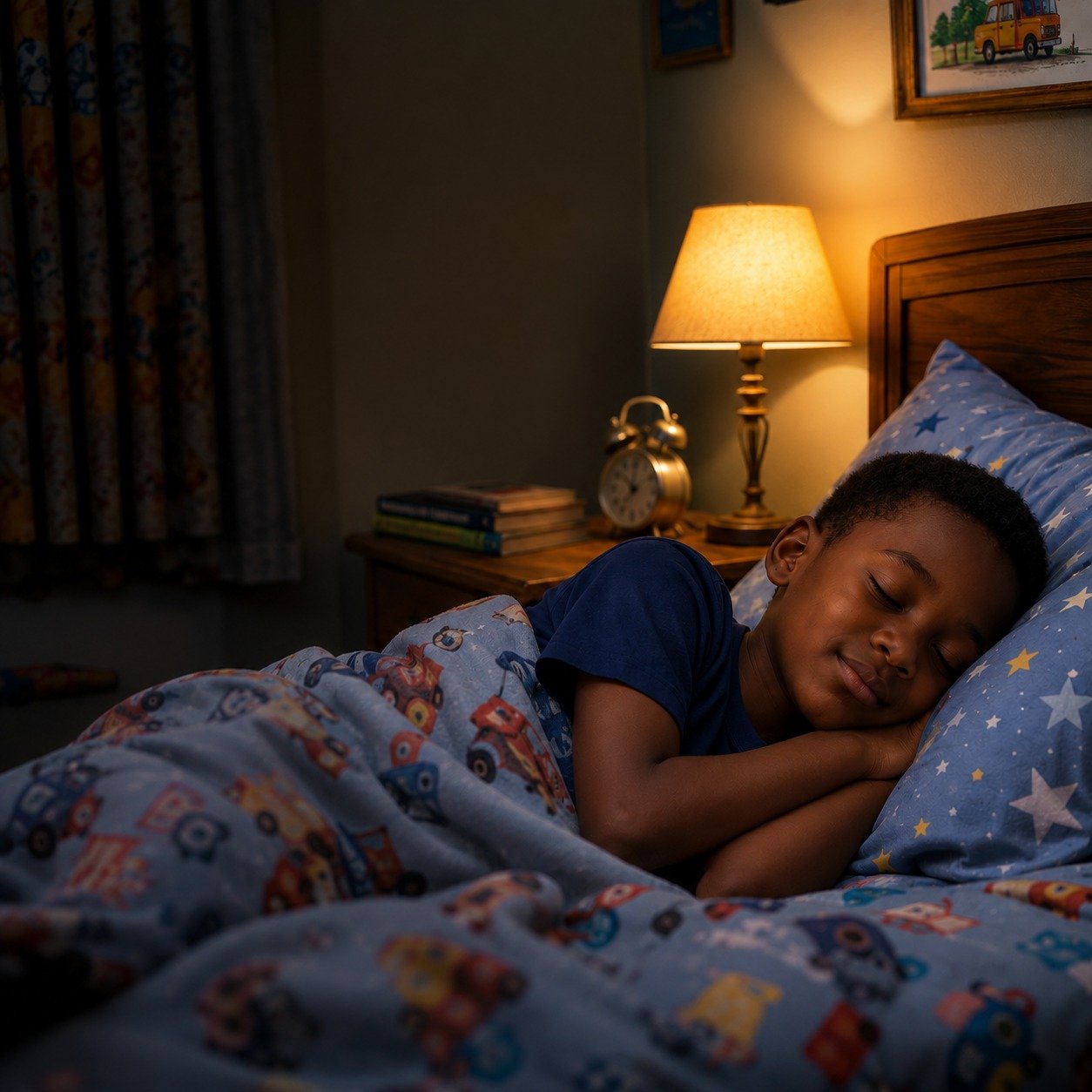
What time does your child usually go to bed?
If bedtime in your home often sounds like, “Just five more minutes!”, followed by negotiations, cartoons, YouTube videos, or a child suddenly remembering three things they urgently need to do, you’re definitely not alone.
For many Nigerian parents, getting children to sleep on time can be challenging. Schoolwork, traffic, evening chores, family activities, electricity issues, screen time and busy household schedules can all make bedtime difficult.
But sleep is more than simply “resting.” Good-quality sleep is an important part of a child’s overall health, learning, memory, behaviour and development. While a child sleeps, the body and brain continue important processes that support healthy development.
So, if your child struggles with concentration at school, forgets what they learned yesterday or wakes up grumpy every morning, it may be worth taking a closer look at their sleep routine. Let’s explore why sleep matters and what parents can do to create healthier sleep habits at home.
Why Is Sleep Important for Children?
Children’s brains and bodies are constantly developing. During sleep, the body gets an opportunity to rest and recover, while the brain continues processing information from the day. Adequate sleep supports several aspects of children’s wellbeing, including:
-
Learning
-
Memory
-
Attention
-
Mood and behaviour
-
Physical growth
-
Immune function
-
Overall development
This is why healthy sleep habits for children should be considered just as important as healthy eating and physical activity.
Sleep and Memory: How Children Remember What They Learn
Imagine your child spends the afternoon learning something new at school. They practise spelling words, learn a new mathematical concept or discover something interesting about science. Learning doesn’t simply stop when the school bell rings. The brain continues processing and organising information, and sleep plays an important role in memory consolidation. In simple terms, sleep helps the brain process and strengthen memories.
This doesn’t mean that sleeping immediately makes a child better at every subject. But consistently getting enough quality sleep supports the brain processes involved in learning and memory.
That’s one reason why staying up late to cram schoolwork isn’t necessarily a good strategy for children. Sometimes, a good night’s sleep may be more helpful than another hour of late-night studying.
Sleep and Attention: A Well-Rested Brain Is Ready to Learn
Have you ever noticed that your child becomes easily distracted after a late night? They may struggle to sit still, lose interest quickly, become unusually irritable or have difficulty following instructions.
Sleep and attention are closely connected. Children who don’t get enough sleep may have more difficulty with attention, concentration, learning and emotional regulation.
For a school-age child, this can affect everything from listening to the teacher to completing homework. So before assuming that your child is simply “not paying attention,” consider asking: “Is my child getting enough sleep?”
Of course, concentration difficulties can have many causes. Persistent concerns should be discussed with a qualified healthcare professional or your child’s teacher.
How Much Sleep Does a Child Need?
Sleep needs change as children grow.
In general, younger children require more sleep than older children and teenagers. The American Academy of Sleep Medicine recommends approximately:
-
Infants: 12–16 hours per 24 hours, including naps
-
Toddlers: 11–14 hours, including naps
-
Preschoolers: 10–13 hours, including naps
-
School-age children: 9–12 hours
-
Teenagers: 8–10 hours
Individual children can vary, but these recommendations provide useful guidance for parents. The important thing is to establish a consistent sleep pattern that suits your child’s age and needs.
Create a Consistent Sleep Routine
Children generally respond well to routines because routines help them know what comes next. Try creating a predictable sequence before bedtime.
For example: Bath → Dinner → Brush teeth → Story/quiet activity → Bed
The exact routine doesn’t matter as much as consistency. Try to keep bedtime and wake-up times relatively consistent, including on weekends where practical.
A child who sleeps at 8:30 p.m. one night, 11:30 p.m. the next and 9:00 p.m. another night may have difficulty developing a stable sleep pattern. A predictable routine can make bedtime feel less like a daily battle.
Make the Bedroom Sleep-Friendly
The environment where your child sleeps can affect sleep quality. Aim for a bedroom that is:
-
Comfortable
-
Quiet
-
Dark or appropriately dim
-
Well ventilated
-
Not excessively hot
-
Free from unnecessary distractions
For Nigerian families, room temperature can sometimes be a challenge, particularly during hot weather. Try to keep the sleeping environment as comfortable as possible. If your child is easily disturbed by noise, reducing unnecessary sounds around bedtime may also help.
What About Screens Before Bed?
This is one of the biggest challenges for modern families. Phones, tablets, televisions, gaming devices and other screens can easily become part of a child’s bedtime routine. But late-night screen use can make it harder for children to settle down, particularly when the content is stimulating.
Try creating a screen-free period before bedtime. Instead of watching another cartoon or scrolling through videos, encourage quieter activities such as:
-
Reading a story
-
Talking about the day
-
Drawing
-
Listening to calm music
-
Gentle stretching
-
Preparing school items for the next day
And remember: children often copy what they see. If parents are constantly using their phones in bed, it can be difficult to convince children that bedtime is screen-free. Make healthy screen habits a family habit.
Nutrition and Your Child’s Sleep
Sleep and nutrition are also connected as part of a child’s overall wellbeing. A growing child needs adequate nutrition to support normal physical and cognitive development. A balanced diet should include a variety of foods providing:
-
Protein
-
Iron
-
Zinc
-
Calcium
-
Vitamin D
-
B vitamins
-
Healthy fats
-
Fruits and vegetables
Good Nigerian food choices can include beans, eggs, fish, chicken, meat, vegetables, fruits, whole grains, yam, sweet potatoes, rice and other nutritious staples. Try to avoid making heavy, sugary or highly caffeinated foods and drinks part of the bedtime routine. Most importantly, don’t use supplements as a replacement for healthy meals.
Food should remain the foundation of children’s nutrition.
Where Does HBeam Care Fit In?
Parents may sometimes look for nutritional products that can complement a healthy lifestyle and support a child’s or family’s nutritional needs.
HBeam Care is formulated with haemoglobin, melatonin, vitamin B12 and zinc and is positioned to support a healthy sleep cycle. Melatonin is a hormone naturally involved in the body’s sleep-wake cycle. However, parents should not assume that more melatonin is always better or that a sleep-support product can replace good sleep habits.
HBeam Care should be used according to its approved product directions and appropriate professional advice. The bigger picture remains important:
A sleep-support product should complement, not replace a healthy bedtime routine, nutritious diet and good sleep environment. If your child regularly struggles with sleep, discuss the concern with a qualified healthcare professional rather than relying solely on supplementation.
What Parents Should Avoid
When trying to improve a child’s sleep, avoid turning bedtime into a stressful punishment. Instead of:
“If you don’t sleep now, I’ll punish you!”
Try:
“It’s bedtime. Let’s get your body ready for rest.”
Children can also develop anxiety around sleep if bedtime becomes associated with constant arguments. Keep the routine calm, predictable and positive. And avoid giving children medicines or supplements intended to make them sleepy without appropriate professional guidance.
Signs Your Child May Not Be Getting Enough Sleep
Every child is different, but possible signs of insufficient sleep may include:
-
Difficulty waking up in the morning
-
Excessive daytime sleepiness
-
Irritability
-
Mood changes
-
Difficulty concentrating
-
Poor attention
-
Falling asleep during quiet activities
-
Struggling with schoolwork
-
Frequent bedtime resistance
These signs don’t automatically mean your child has a sleep disorder. However, if sleep problems are persistent or significantly affect your child’s behaviour, learning or daily life, speak with a healthcare professional.
A Simple Nigerian Parent’s Bedtime Checklist
Tonight, ask yourself:
✓ Is my child’s bedtime consistent?
✓ Does my child get enough sleep for their age?
✓ Are screens switched off before bedtime?
✓ Is the bedroom comfortable and quiet?
✓ Is my child eating a balanced diet?
✓ Is bedtime calm rather than stressful?
Small changes can make a meaningful difference when practised consistently.
The Bottom Line: Sleep Is Part of Learning
We often tell children to eat well, study hard and pay attention. But we shouldn’t forget something equally important:
Sleep well.
A well-rested child is better positioned to wake up ready for the day, pay attention, process new information and participate in learning. Healthy sleep supports memory, attention, mood, physical wellbeing and development. And when good sleep is combined with nutritious food, physical activity, loving relationships and a stimulating learning environment, children have a stronger foundation for healthy growth.
So tonight, when your child asks for “just one more episode,” remember:
Bedtime isn’t time wasted. It’s part of the work their growing body and developing brain need to do. Good sleep today can help prepare your child for a better tomorrow.
Frequently Asked Questions About Children’s Sleep
Does sleep improve children’s memory?
Sleep supports the brain processes involved in memory consolidation. Getting adequate, good-quality sleep is therefore an important part of healthy learning and development.
Does lack of sleep affect children’s concentration?
Insufficient sleep can affect attention, concentration, mood and daytime functioning. If a child consistently struggles with concentration, parents should consider sleep as one possible factor while also seeking professional advice when appropriate.
Should children use phones before bed?
It is generally helpful to establish a screen-free period before bedtime. Phones, tablets, television and stimulating content can make it harder for some children to settle down.
What is the best bedtime routine for children?
A simple, predictable routine can work well. For example: bath, dinner, brushing teeth, quiet reading or conversation, then bed. Consistency is more important than having a complicated routine.
Can nutrition affect children’s sleep?
Overall nutrition contributes to children’s health and development. A balanced diet containing adequate protein, vitamins, minerals and healthy fats should form the foundation of a child’s nutritional wellbeing.
Is HBeam Care a replacement for a bedtime routine?
No. HBeam Care is formulated with haemoglobin, melatonin, vitamin B12 and zinc and is positioned to support a healthy sleep cycle. It should be used according to approved directions and should complement, not replace, healthy sleep habits, a suitable diet and good sleep hygiene.